

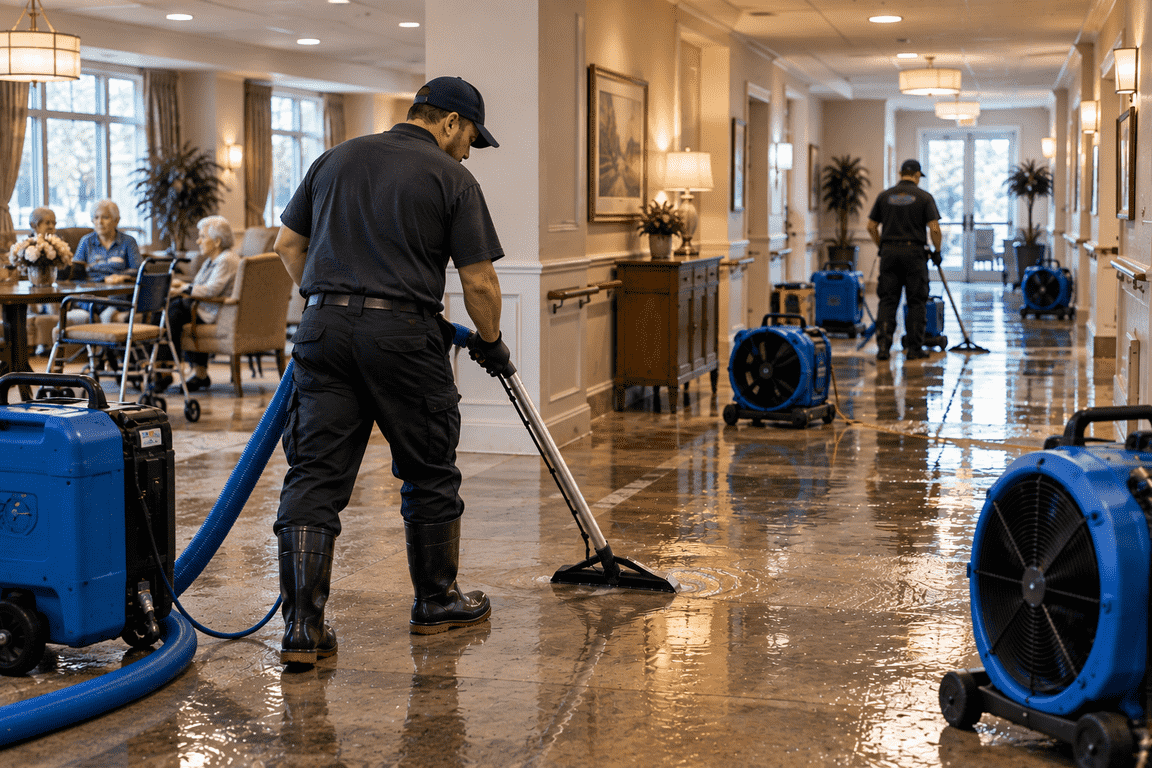
A water emergency in a nursing home isn't just a building problem. Residents have limited mobility. Medical equipment has to stay operational. Hallways need to remain passable for staff. Even a small plumbing failure disrupts daily care the moment water reaches resident rooms, dining areas, kitchens, or offices.
For nursing homes and senior living facilities throughout Tulsa and surrounding areas, preparation is what determines whether the response is organized or reactive.
Assurance Restoration provides professional water damage restoration for commercial properties including nursing homes and senior living facilities — extraction, structural drying, cleanup, and repairs. Understanding the risks before an emergency happens makes every subsequent decision faster and more effective.
Nursing Home Water Damage Is a Different Problem
Nursing homes can't close during restoration. That's what separates them from most commercial properties.
Residents need continuous access to medications, mobility equipment, meals, restrooms, and staff. Coordination matters as much as the technical restoration work itself.
Water also spreads fast through large facilities. A failed supply line on one floor affects rooms below it before anyone catches it. A roof leak moves through insulation and wall cavities and shows up in an occupied area well after the intrusion started. The visible puddle is almost never the full extent of the problem.
Know Where Water Problems Start
Preparation means knowing which areas carry the most risk. Facility managers should routinely monitor:
- Resident bathrooms and plumbing fixtures
- Kitchens and laundry areas
- Water heaters and mechanical rooms
- Supply lines and plumbing connections
- HVAC and condensation drainage systems
- Roofs, flashing, gutters, and drainage systems
- Fire sprinkler systems
- Areas with previous leaks or moisture history
Regular inspections don't prevent every emergency. They do consistently reduce the scale of what follows.
Tulsa facilities also need to account for severe weather. Heavy rain, high winds, and roof damage create sudden water intrusion — which is why storm damage repair belongs in the same preparedness conversation as routine plumbing maintenance.
Write the Plan Before You Need It
When water is spreading through a building, employees shouldn't be figuring out the response from scratch. A written plan built before an emergency keeps the response organized when pressure is high.
At minimum it should cover:
- Locations of main and secondary water shutoff valves
- Contact information for facility management and maintenance
- Procedures for restricting access to damaged areas
- A plan for safely relocating residents when necessary
- Locations of critical medical and electrical equipment
- Emergency restoration contact information
- Procedures for documenting property damage
Every employee who might respond to a water emergency should know who shuts off water, who contacts restoration professionals, and what their specific role is — established before the emergency, not during it.
What to Do the Moment Water Damage Occurs
Resident and staff safety comes before cleanup, documentation, or anything else.
Keep people away from standing water, damaged ceilings, and exposed electrical equipment. Residents using wheelchairs, walkers, or other mobility aids need help navigating around affected areas. If it's safe and the source is identifiable, stop the water flow.
Then call a professional restoration company immediately. Hidden moisture develops fast — the sooner extraction and moisture evaluation begin, the less water absorbs into drywall, flooring, insulation, and cabinetry throughout the facility. Every hour of delay is another hour moisture works deeper into building materials.
Extraction Is Just the First Step
Determining how far moisture actually traveled matters more than removing what's visible.
Water moves beneath flooring, behind baseboards, inside wall cavities, and through ceiling assemblies. A hallway can look completely dry while moisture sits trapped in materials beneath the surface — quietly building toward structural deterioration and mold growth.
Professional restoration involves extraction, moisture mapping, commercial air movement, dehumidification, and ongoing monitoring throughout drying. Decisions get made based on actual moisture readings — not on how things look.
When the Water Is Contaminated
The source of the water changes how the affected area has to be handled.
A broken clean-water supply line is a fundamentally different situation than a sewage backup or contaminated floodwater. When sewage is involved, porous materials require removal — not drying and cleaning. Sewage cleanup in a nursing home demands particular care — the resident population is vulnerable, and contaminated areas need to be fully restricted until professional remediation is complete.
Nobody on staff should perform cleanup in a contaminated area.
Resident Rooms, Furnishings, and Common Areas
The building structure isn't the only thing affected. Resident furniture, carpeting, upholstered seating, curtains, and personal belongings all take damage. In dining rooms, lounges, and activity spaces, the volume of affected items adds up quickly.
Depending on the water source and how long materials were exposed, some items can be professionally cleaned and restored — others need to come out. Every item gets evaluated individually. Assuming everything is a total loss or that everything can be saved both lead to the wrong outcome.
Plan for Reconstruction Before It Becomes Urgent
Major water losses in senior living facilities often require reconstruction after extraction and drying are complete. Drywall, insulation, flooring, cabinetry, and ceilings that absorbed too much moisture or were contaminated need to be removed and replaced.
Facility managers should understand before an emergency how mitigation transitions into permanent repairs. Reconstruction coordinated by the same team that handled mitigation moves faster and creates less disruption to residents and operations than bringing in a separate contractor mid-project.
The goal isn't simply drying the building. It's moving efficiently from emergency response through permanent repairs while keeping disruption to residents and staff as minimal as possible.
Prepare Now
The best emergency preparedness plan exists before it's needed. Know where the shutoffs are. Identify high-risk areas. Assign clear staff responsibilities. Plan for resident movement. Keep restoration contacts ready.
When flooding does occur, that preparation is what allows professional restoration to move immediately — containing damage, removing water, finding hidden moisture, drying the structure, and starting repairs without losing time to confusion about who does what.
If your Tulsa nursing home, assisted living community, or senior living facility experiences a water emergency, contact Assurance Restoration to discuss the damage and the right next steps.