
24/7 Emergency Response — Fast. Local. Done Right.
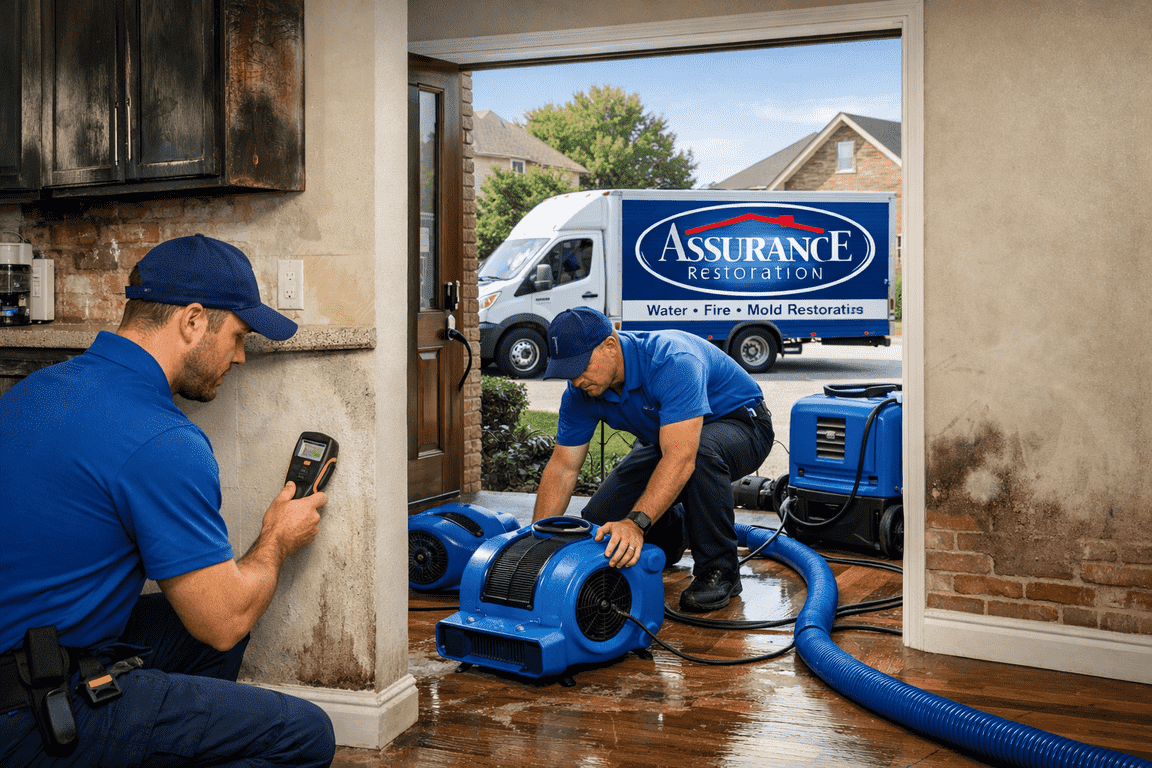
A pipe gives out. A storm pushes water where it shouldn't be. A small leak turns into a bigger problem while no one's looking. Then you're standing there trying to figure out how bad it is—and how far it's going to spread.
Here's what most people don't realize at first: the damage you see is only part of it. The real problem is what's already moving behind walls, under floors, and into the structure of the home. What you do next determines how much of that damage sticks around.
Call Now: 918-295-8400Damage doesn't happen in clean categories. Water leads to mold. Storms lead to leaks. Fires leave behind smoke and water from suppression. Everything overlaps. That's why working with a company that handles the entire process matters.
Water doesn't stay put. It spreads, sinks, and settles into materials fast. Proper extraction and drying isn't optional—it's what keeps a bad situation from turning into a rebuild.
View ServiceAfter a fire, the damage keeps working even when the flames are gone. Smoke gets into everything. Odor lingers. Surfaces break down over time if it's not handled correctly.
Fire Damage Smoke DamageMoisture that isn't handled properly leads to mold. And mold doesn't need much time. Once it starts, it spreads quietly and steadily.
View ServiceTulsa storms don't just hit roofs—they expose weak points everywhere. Water follows those openings fast.
View ServiceSome situations aren't just messy—they're dangerous. Contaminated water requires proper removal and sanitation to make a space safe again.
Sewage Cleanup Biohazard CleanupCleanup is only half the job. The goal is getting your property back to where it was—or better—without dragging the process out.
Reconstruction RemodelingSome places deal with one type of issue. Tulsa deals with several at once.
Heavy rain can overwhelm drainage quickly, sending water into basements, crawl spaces, and foundations before you have time to react.
Wind and hail push water into places it shouldn't reach—through roof damage, siding gaps, and around windows and doors.
Humidity keeps moisture from drying out as fast as it should, giving mold and structural damage more time to set in after a water event.
Older plumbing systems add another layer of risk. Pipe failures happen without warning and water spreads fast once it starts.
Individually, each of these is manageable. Together, they create a pattern—damage happens faster, and it spreads further if it's not handled quickly.
We cover the entire Tulsa area. No matter where the issue starts, the goal is the same—get there quickly and stop it from getting worse.
There's a window where damage is still manageable. After that, everything compounds.
Materials absorb it. Floors, walls, and insulation begin soaking up standing water within the first hour.
Structure weakens. Once framing and subfloor are saturated, the damage is no longer cosmetic—it's structural.
Mold starts. Oklahoma's humidity means moisture doesn't dry on its own. Mold can establish within 24–48 hours.
That chain reaction is what drives up repair costs and extends recovery time. Fast response interrupts that process.
That's why emergency service isn't just a convenience—it's what keeps a situation from escalating.
Damage doesn't check the clock before it happens. Waiting until morning or the next business day usually makes things worse.
We respond immediately—day or night. Our team is ready to dispatch the moment you call.
We arrive ready to extract water and begin drying. Every hour matters when water is actively spreading through your property.
We focus first on stopping damage from reaching unaffected areas—then move into full extraction and structural drying.
The sooner the process starts, the more of your home can be preserved. Early stabilization keeps a water event from becoming a reconstruction project.
Most people don't delay on purpose. They underestimate how quickly things move.
Water reaches insulation and framing. What looked like a surface problem is already inside your walls and under your floors.
Flooring begins to warp. Hardwood buckles, laminate swells, and carpet padding becomes saturated and unsalvageable.
Mold can begin forming. Oklahoma's humidity accelerates this timeline. Once mold is present, the scope and cost of the job grows significantly.
Once that happens, the job shifts from cleanup to repair—and sometimes full reconstruction.
Every area has its patterns. Tulsa has its own. The way storms hit, how homes are built, how moisture behaves here—it all matters when restoring a property.
At Assurance Restoration, we focus on handling the situation correctly from the start. Not rushed. Not patched. Done the way it needs to be done so the problem doesn't come back later.
Learn More About Our TeamDamage doesn't improve on its own. It spreads, settles, and gets more expensive the longer it sits. If your home or business in Tulsa has been affected, get it handled early.

Complete water extraction, drying, and restoration for burst pipes, flooding, and leaks.
View Service
Full fire and smoke damage cleanup, odor removal, and structural restoration.
View Service
Professional mold removal to address growth caused by water intrusion or flooding.
View Service