

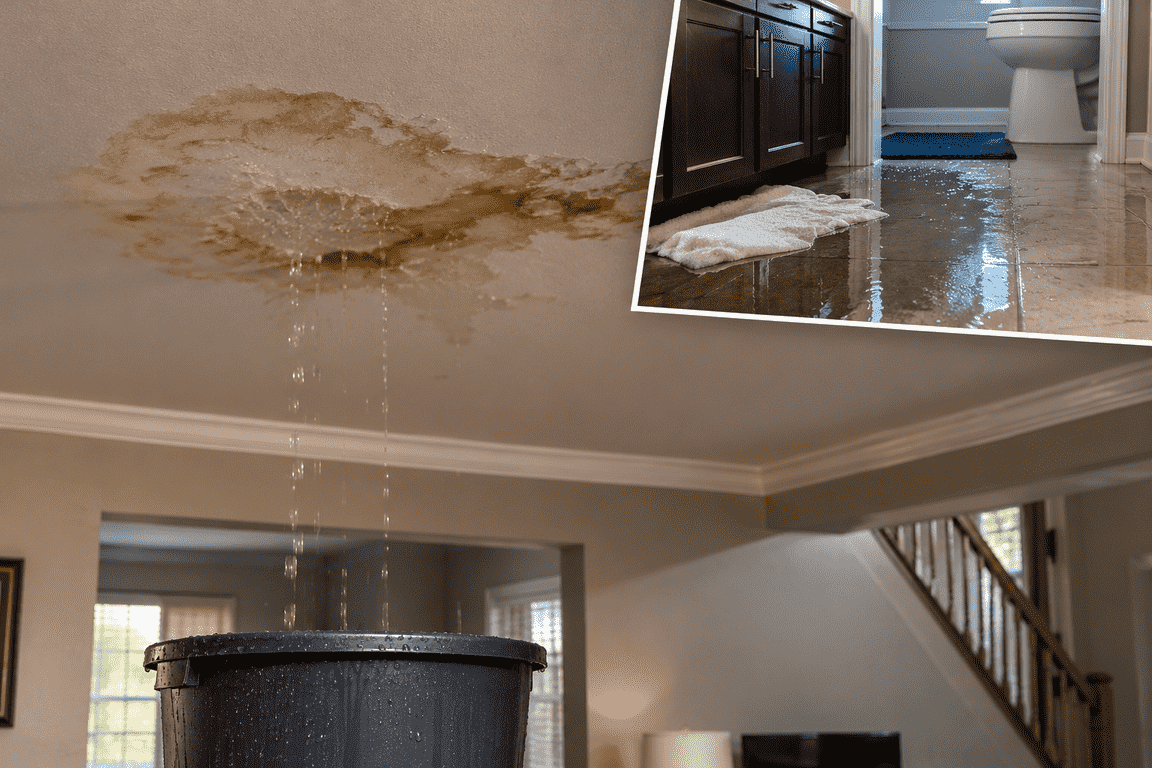
An upstairs bathroom flood rarely stays upstairs.
An overflowing tub, a failed toilet supply line, or a leaking shower pan can send water through the floor, into the ceiling below, and down through wall cavities before anyone sees a stain. By the time water shows up on a living room ceiling, it has already been working through the structure for a while.
This guide explains how water moves through a two-story home, what to do in the first hour, and what professional restoration involves for Tulsa homeowners.
How an Upstairs Bathroom Leak Reaches the Rest of the House
Water follows gravity and the path of least resistance. In a typical two-story home, that path runs from the bathroom floor into the subfloor, through the joist cavity, and into the ceiling drywall and insulation below. From there it spreads sideways along framing and drips down inside wall cavities.
That's why a ceiling water leak is almost never limited to the spot where you see the stain. Common signs of a flood that has already spread include:
- Brown or yellow stains spreading across the ceiling
- Bubbling, sagging, or soft drywall
- Dripping from light fixtures or ceiling vents
- Peeling paint or damp wallpaper on walls below the bathroom
- A musty odor that lingers after the visible water is gone
- Warped or cupping hardwood and laminate flooring
If you notice any of these, the water has likely traveled further than it looks. Hidden moisture inside walls and ceilings is the most common reason a small bathroom leak turns into a large repair.
What to Do in the First Hour
Speed matters more than anything else after a bathroom flood. Here's the order that protects the most of your home:
- Stop the water. Shut off the fixture's supply valve, or the main shutoff if you can't find it.
- Cut power if water is near electrical. If water is dripping through ceiling fixtures or outlets, turn off the breaker for that area. Don't stand in standing water near live electrical.
- Move belongings. Get furniture, rugs, and electronics out of the affected rooms below.
- Photograph everything. Document the bathroom, the ceiling below, and any damaged contents before cleanup starts. Your insurance claim depends on it.
- Call a professional. Towels and fans handle surface water. They don't reach the moisture inside the structure.
Why Surface Cleanup Isn't Enough
Mopping up the bathroom and running a fan can make a flood look resolved. It isn't. Water that has soaked into subfloor, insulation, and drywall stays there, and it keeps causing damage.
Professional water damage restoration starts with finding where the water actually went. Moisture meters and thermal imaging map the saturation behind walls and above ceilings. Extraction removes standing water. Commercial air movers and dehumidifiers then dry the structure, and technicians monitor moisture readings until the materials return to safe levels.
Drying decisions come from the readings, not from how the room looks. Drywall can feel dry on the surface while the insulation behind it is still wet.
The Mold Clock Starts Fast
Mold can begin growing within 24 to 48 hours in damp building materials. Ceiling cavities and wall interiors are ideal spots because they stay dark, warm, and poorly ventilated. In a Tulsa home during humid months, the window is even tighter.
That's why a slow response is so costly. A flood caught and dried within a day or two is usually a drying project. One left for a week often becomes a demolition and mold project. If you suspect moisture has been sitting, this guide to mold remediation in Tulsa explains what to look for and what the process involves.
When Ceilings, Floors, and Fixtures Need Rebuilding
Some bathroom floods go beyond drying. Saturated drywall, swollen subfloor, damaged insulation, and warped flooring often can't be saved and have to be replaced.
Reconstruction services handled by the same team that did the drying keep the project coordinated. The crew rebuilding your ceiling already knows what the mitigation team found behind it, so there's no gap in information and no second contractor to schedule.
Many Tulsa homeowners also use this stage to update the bathroom itself. When the floor and walls are already open, replacing a vanity, flooring, or tile adds little extra disruption.
What to Expect When You Call a Tulsa Restoration Company
A good restoration company will arrive quickly, assess the full extent of the damage, and explain what needs to happen before any work begins. Expect moisture mapping, a clear drying plan, and documentation you can send to your insurance carrier. Ask how they'll monitor drying progress and how they handle the transition into repairs.
Water damage in a two-story home is almost always larger than it looks. A thorough assessment is what prevents surprises later.
The Takeaway
Upstairs bathroom floods spread fast and hide well. Stopping the water, documenting the damage, and getting professional drying started within the first day is what keeps a plumbing failure from becoming a major renovation.
If your Tulsa home has had a bathroom flood or you're seeing a water leak through the ceiling, contact Assurance Restoration to schedule an inspection or request emergency service. Tulsa and surrounding areas, with one team handling everything from extraction through rebuild.