

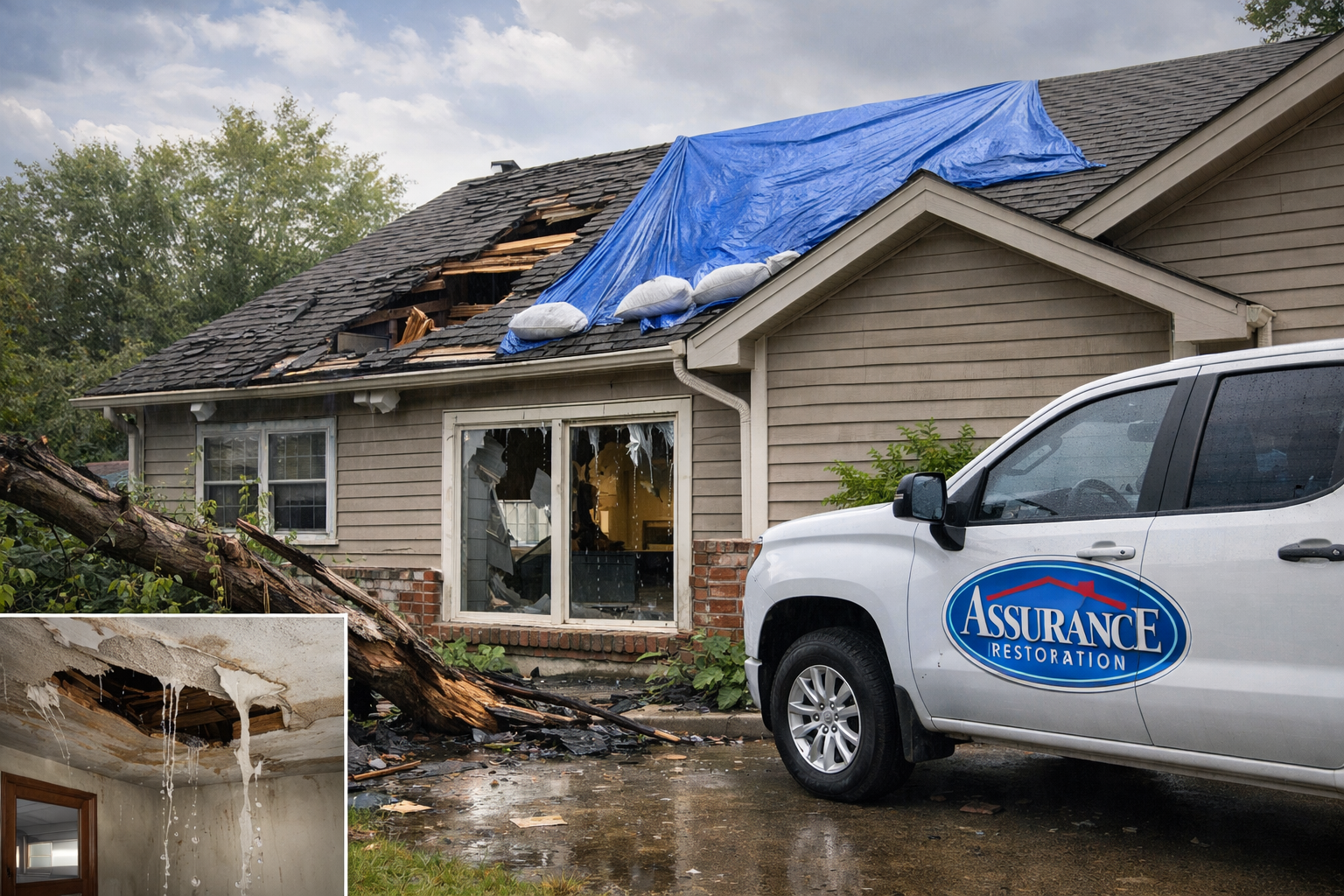
You don't get much notice here. The sky darkens. The wind picks up. Then hail starts slamming the roof like gravel thrown from the clouds.
That's Tulsa.
And when a severe storm rolls through, it doesn't just mess up your yard. It tests every seam, every shingle, every weak spot in your home. What looks fine from the driveway can be hiding damage that gets worse by the hour.
If you're facing storm damage restoration in Tulsa, the most important move isn't guessing. It's acting.
Wind Damage in Tulsa Starts Small — Then Spreads
Most wind damage doesn't look dramatic at first. No tree through the living room. No missing half of a roof.
Instead, wind lifts a shingle just enough to break the seal. It bends flashing. It forces rain sideways into places water was never supposed to go.
You won't always see it that day.
But a week later, there's a stain on the ceiling. A month later, drywall starts to swell. By then, moisture has already traveled.
That's why professional storm damage restoration in Tulsa isn't just about replacing what's torn off. It's about checking what shifted, what loosened, and what's quietly absorbing water behind the scenes.
Wind damage in Tulsa rarely stays "just exterior."
Hail Damage to Tulsa Homes Is Sneaky
Hail can be brutal, but it's also deceptive.
From the ground, your roof might look fine. Up close, shingles can be bruised, cracked, or stripped of protective granules. That damage weakens the entire roofing system.
Over time, granules wash into gutters. UV rays accelerate breakdown. Shingles dry out and split. Leaks form during the next storm.
Hail damage to Tulsa homes often shows up later, not immediately. Waiting for water to appear inside usually means the damage has already progressed.
An inspection after a severe hailstorm isn't overreacting. It's smart maintenance.
Water Intrusion Is Where Costs Climb Fast
Water is relentless. It seeps under doors. It backs up through drains. It slips through roof penetrations you didn't even know were vulnerable.
Once inside, the clock starts ticking.
Within 24 to 48 hours, moisture can begin affecting structural materials. Drywall weakens. Wood swells. Flooring buckles. Mold risk increases.
That's when you need immediate water damage restoration — not a shop vac and a fan.
If heavy rain causes a sewer backup, that's a different level of hazard. Contaminated water requires professional sewage cleanup to protect your family's health.
Property damage clean up in Tulsa isn't just drying things out. It's preventing secondary damage.
Mold Doesn't Wait for Permission
Tulsa humidity makes mold growth easier once moisture is present.
You might notice a musty smell that wasn't there before. Dark patches on ceilings or baseboards. Allergy symptoms that flare up indoors.
Mold spreads into porous materials. It doesn't stay politely on the surface. Proper mold remediation involves containment, air filtration, and moisture control — not just wiping down a wall.
Storm damage restoration in Tulsa isn't complete until the environment is dry and stable.
Lightning and Fire Damage After a Storm
Severe storms don't just bring wind and rain. Lightning strikes can spark attic fires or damage electrical systems.
Even small fires leave smoke behind. Smoke travels through ductwork, into insulation, into materials you can't easily see.
In those cases, professional fire damage restoration and thorough smoke damage cleanup are necessary to restore indoor air quality.
Storm losses are often layered. Water. Fire. Smoke. Structural damage. It all overlaps.
Emergency Storm Cleanup in Tulsa: Stabilize First
After severe weather, the first priority isn't making everything look perfect. It's preventing things from getting worse.
Emergency storm cleanup in Tulsa typically includes securing exposed roof or window openings, removing standing water, setting up commercial drying equipment, checking moisture levels inside walls and flooring, and clearing debris safely.
Once the property is stable, full restoration begins.
Assurance Restoration offers complete mitigation and rebuilding through reconstruction services, along with support services like content cleaning and carpet cleaning when materials can be saved.
In some cases, homeowners choose to upgrade or refresh damaged areas through professional remodeling services during the rebuild process.
One experienced team handling everything simplifies communication and speeds recovery.
You can learn more about the company's background on the About page.
What To Do Right After a Tulsa Storm
If your home takes a hit: make sure everyone is safe. Avoid standing water near outlets or electrical panels. Take clear photos of visible damage. Contact your insurance provider. Schedule a professional inspection.
Even minor wind damage in Tulsa can escalate if left unaddressed. The same goes for hail damage to Tulsa homes or interior water exposure.
Fast response lowers overall repair costs and reduces long-term structural risk.
Storms Will Keep Coming. Your Response Is What Changes the Outcome.
Tulsa weather isn't slowing down. High winds, hail, and heavy rainfall are part of living here.
What protects your home isn't luck. It's action.
Early intervention prevents mold. It reduces structural deterioration. It protects air quality. It limits reconstruction costs.
Assurance Restoration provides water and fire damage restoration and mitigation services in Tulsa and surrounding areas with a practical approach: assess thoroughly, mitigate quickly, restore correctly.
If you need storm damage restoration in Tulsa, emergency storm cleanup in Tulsa, or reliable property damage clean up in Tulsa, reach out through the official Contact page to schedule an inspection.
Storms move fast. The right response moves faster.