

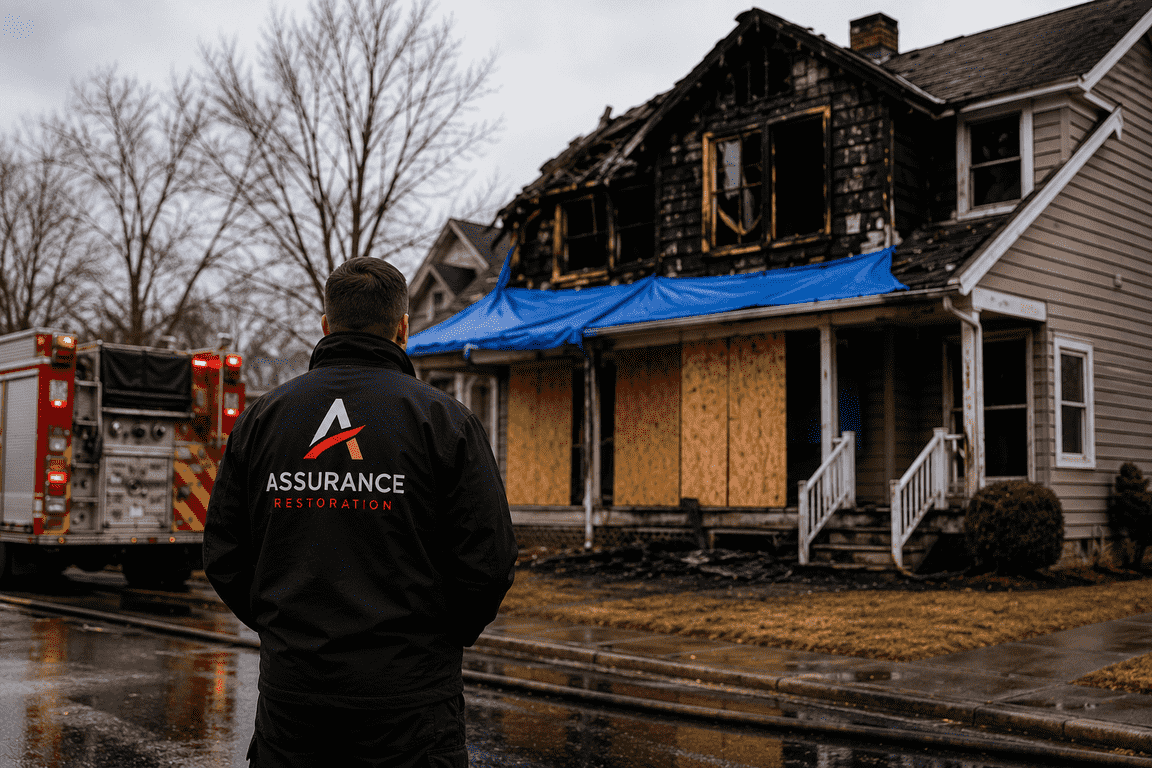
The trucks pull away. The scene clears. And then it's just you, standing in front of your house, figuring out what comes next.
That moment — right after the fire department leaves — is when the decisions that matter most actually start. What you do in the next 24 hours shapes how long recovery takes, how much it costs, and how much of your home and belongings can be saved.
Here's what to do, and what not to do, after a house fire in Tulsa.
Don't Walk Back In Yet
It feels instinctive to go inside and see what's there. Don't — at least not until you have clearance from the fire department or local authorities.
Fire weakens structural components that still look intact. Floors that appear solid may not be. There's likely exposed wiring, broken glass, and debris that aren't immediately obvious. Hot spots can persist inside walls and in attic spaces long after the visible fire is out.
Wait for the all-clear. If sections of the roof or exterior walls were compromised, emergency board-up and roof tarping need to happen before anyone enters — that protects both the structure and anyone walking through it.
Call Your Insurance Company Before You Do Anything Else
Get the claim started immediately. The earlier you make contact, the faster the process moves — and restoration timelines are directly tied to how quickly the claim gets documented.
If it's safe, photograph visible damage from outside or from the doorway. Don't move belongings or start cleaning until your adjuster weighs in — disturbing the scene can complicate the documentation process. A restoration company experienced in fire damage recovery can help document the loss thoroughly and communicate directly with your carrier throughout the project.
Secure the Structure Against What Comes Next
A fire doesn't stop causing damage when the flames go out. Open roof sections, broken windows, and compromised walls immediately expose the home to rain, wind, animals, and theft.
Emergency board-up and tarping aren't cosmetic — they're the difference between a contained loss and one that keeps growing. Getting the structure protected is the first physical step in any serious fire restoration plan.
Smoke Damage Goes Further Than You Think
Most homeowners focus on what burned. The smoke is often the bigger problem.
Smoke doesn't stay in the room where the fire started. It travels through hallways, HVAC ductwork, and wall cavities, depositing acidic soot on surfaces throughout the home. That soot continues working — etching finishes, staining drywall, corroding metals — for days after the fire is out.
Professional smoke and soot cleanup requires specialized methods that go well beyond what household cleaning products can accomplish. The longer soot sits, the more permanently it bonds to surfaces. Cabinets, flooring, electronics, and personal belongings that could have been restored become unsalvageable the longer they're left untreated.
Water Damage from Firefighting Efforts Is a Real Problem
This surprises most people: the water damage after a structure fire is often extensive — sometimes more widespread than the fire damage itself.
Thousands of gallons can be used to suppress a house fire. That water soaks into insulation, subfloor, drywall, and framing fast. If it isn't extracted and dried with commercial equipment, mold can establish itself within 24 to 48 hours — turning a fire restoration project into a fire and mold restoration project.
Water extraction and structural drying needs to start as soon as the property is accessible. It's not a step that can wait.
More Can Be Saved Than You'd Expect
Not everything in a fire-damaged home is a loss. Furniture, clothing, family photographs, documents, and electronics can often be professionally restored if the process starts quickly.
Content cleaning services are specifically designed to remove smoke residue from belongings before it permanently bonds. The sooner that work begins, the more gets saved — and the more replacement costs come down.
Reconstruction Is the Final Phase — But Plan for It Early
Once the mitigation work is complete — smoke cleaned, water dried, debris removed — the rebuild begins. Depending on the severity of the fire, that can involve structural framing, drywall, roofing, flooring, cabinetry, painting, and finish carpentry.
Fire reconstruction works best when it's managed by the same team that handled mitigation. One point of contact, one timeline, no gaps between what the restoration crew left and what the rebuild crew inherited.
Time Is the Variable You Can't Get Back
Smoke residue bonds more permanently every hour it sits. Water works deeper into building materials. Odors become harder to neutralize. The window for saving contents closes.
Fast, professional fire damage response isn't about urgency for its own sake — it's because the outcome genuinely depends on how quickly the right work starts.
If your Tulsa home has been through a fire, contact Assurance Restoration to get a team on site and a recovery plan in place. The sooner the process starts, the better the result.